
 contant us:
Bucket elevator company leads industry innovation
The bucket elevator is a core mechanical device for vertical transportation of bulk materials, widely used in mining, building materials, chemical industries, grain, metallurgy, and other fields. Its working principle involves loading materials from the bottom through buckets fixed on traction components (such as chains or belts), continuously lifting them to the top for discharge, achieving efficient and enclosed vertical transportation. This equipment is suitable for granular, powdered, and small block materials, with notable advantages in scenarios requiring large height differences and stringent dust control requirements. Bucket elevators can be classified into belt-type, chain-type, and plate-chain types based on structure, with different forms adapting to varying material characteristics and working conditions.
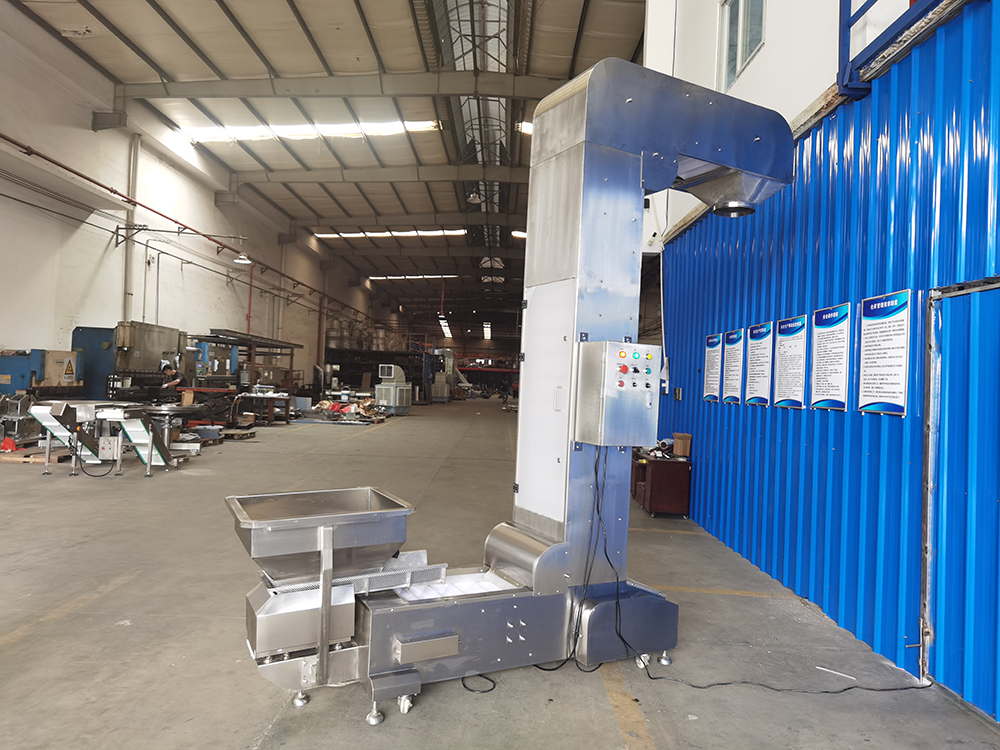
From a technical perspective, the bucket elevator boasts significant advantages such as high conveying capacity, smooth operation, low energy consumption, and compact footprint. Its core components include the drive unit, traction member, buckets, casing, and backstop mechanism, which work in coordination to ensure continuous and reliable operation. Modern bucket elevators commonly use high-strength materials for buckets and chains to enhance wear resistance; the casing's sealed design effectively prevents dust leakage, meeting environmental protection requirements. Some high-end models integrate intelligent monitoring systems capable of real-time tracking of parameters like tension, speed, and temperature, enabling fault prediction and preventive maintenance to improve equipment availability and operational safety.
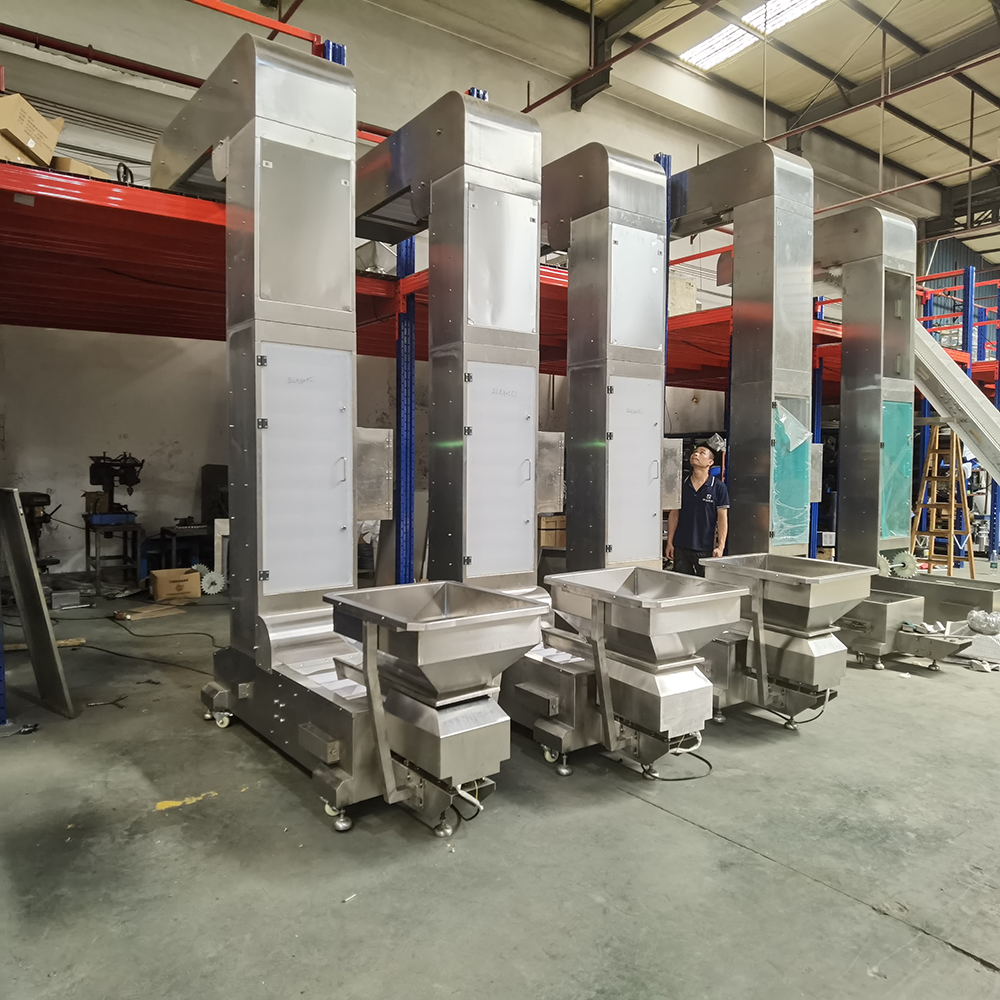
In practical applications, bucket elevators need to be customized according to material characteristics (such as particle size, humidity, grindability), lifting height, conveying capacity, and environmental conditions. For example, high abrasive materials should use a plate chain structure, while lightweight and low wear materials can use a belt structure to reduce costs. During installation, attention should be paid to verticality, foundation stability, and feeding uniformity to avoid overloading or material blockage. The unloading methods are divided into centrifugal, gravity, and mixed types, and should be selected reasonably according to the flowability of the material to ensure thorough unloading and no residue. In addition, the maintenance cycle and lubrication management of equipment directly affect their service life, and standardized operating procedures need to be established.
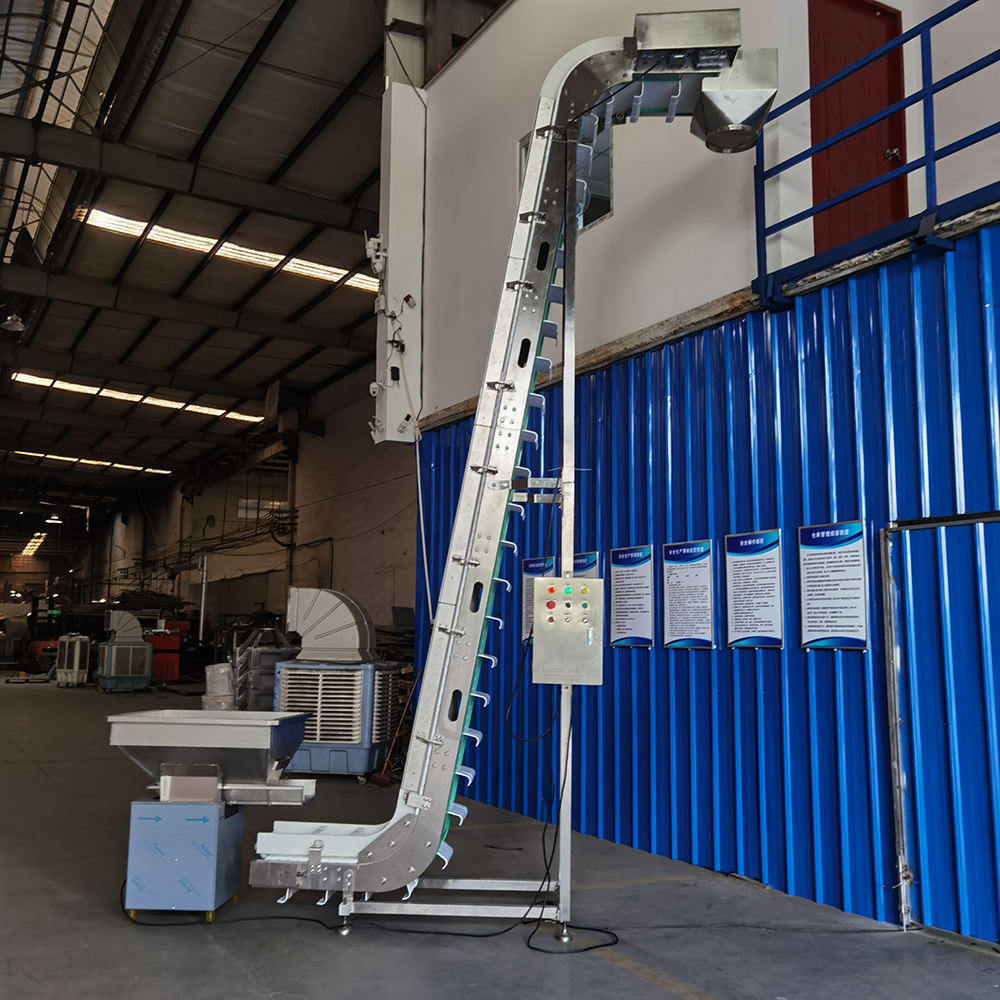
From the perspective of development prospects, with the deepening trend of industrial automation and green manufacturing, bucket elevators are developing towards intelligence, energy saving, and modularization. Lightweight design reduces energy consumption, and new composite materials enhance wear resistance; A remote monitoring system that integrates IoT technology to achieve visual management of device status and improve operational efficiency. At the same time, specialized models for special working conditions such as high temperature, explosion-proof, and corrosive environments continue to emerge, expanding their application scenarios. In the future, integrating with smart factory systems and achieving predictive maintenance will become an important direction for technological evolution.
Overall, as a key equipment for vertical conveying of bulk materials, bucket elevators have continuously improved their technological maturity and application breadth. In the context of manufacturing transformation and upgrading, equipment manufacturers need to focus on reliability, environmental friendliness, and intelligent upgrading, and promote the development of products towards high added value. At the same time, the user side needs to pay attention to selection matching and operation and maintenance management, fully utilize equipment performance, achieve long-term stable operation, and provide strong support for efficient collaboration of the production system.
-
03-10
What industries and scenarios are suitable for Z-type bucket elevators
The Z-type bucket elevator, characterized by its unique "Z" shaped structural design, enables multi-stage conveying paths (Horizontal-Vertical-Horizontal). Known for its compact footprint, multi-point loading/unloading capabilities, superior sealing, and low breakage rates, it is widely ut
-
03-04
Specially designed for cleanliness: Z-type hoist is a reliable choice for complex working conditions
In industries such as food, medicine, and fine chemicals that require strict cleanliness, material transportation not only needs to be efficient and stable, but also must eliminate pollution risks.The Z-shaped hoist is designed to meet this demand - its unique Z-shaped structural design effectively
-
01-30
Lifting Machine Disc Feeding and Sorting Machine
The disc material handling and sorting machine for elevators is an integrated, modular intelligent front-end processing system that combines three major functions—vertical lifting, centrifugal material handling, and optical sorting (or weight sorting)—into a single unit. Specifically designed for
-
01-22
Small bag packaging machine enterprise: innovation driven, leading the new future of the packaging industry
In today's industrial production field, the efficiency and refinement of the packaging process are increasingly valued. As a key equipment for product packaging, the development and application level of small bag packaging machines directly affect the packaging process of many industries. With t